Bugvirus Font: A Retro Display Typeface for Branding
Last Tuesday, I was sitting at a worktable covered in prototype packaging for a client who sells artisanal hot sauce. We had the perfect bottle, the right color palette, and a compelling brand story, but something felt off. The labels looked generic. They lacked that specific spark of personality that makes a customer pick up a jar at a farmers market or stop scrolling on Instagram. We tried elegant serifs and modern sans serifs, but they felt too corporate for a brand rooted in nostalgia and handmade craft. That is when I pulled up Bugvirus.
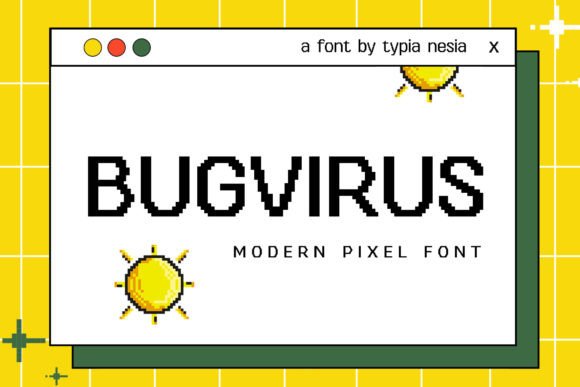
Within minutes, the entire mood of the project shifted. Bugvirus is not just another pixel font; it is a display typeface that instantly unlocked a sense of retro warmth and digital playfulness. For small business owners and creators, finding a font that balances nostalgic charm with professional polish is rare. This review explores how integrating this specific pixel-style font into real business materials can transform a brand from forgettable to memorable, based on practical application rather than theory.
Capturing Nostalgia Without Looking Dated
The first thing you notice about Bugvirus is its personality. In the world of typography, pixel fonts often risk looking cheap or unfinished, like a placeholder text from a 1990s website. Bugvirus avoids this trap entirely. It captures the essence of retro gaming and early digital technology but refines it into a cohesive design asset suitable for commercial use. The pixels are deliberate, creating a rhythm that feels curated rather than accidental.
When we applied Bugvirus to the hot sauce label, it acted as an immediate visual hook. It signaled to the customer that this product was fun, approachable, and crafted with care. For businesses in creative niches—like indie game studios, vintage clothing boutiques, arcades, or tech-forward coffee shops—this font serves as a shorthand for your brand values. It tells a story of heritage and geek culture without needing a paragraph of explanation. However, because it is a display font, it demands respect. It works best when given space to breathe, serving as the headline or logo element rather than the fine print.
Real-World Applications for Small Business Materials
A font is only as good as its application. Through testing Bugvirus across various branding touchpoints, it becomes clear where this typeface shines and where it needs support. Here is how it performs in actual business scenarios:
- Product Packaging and Labels: On a candle jar or skincare box, Bugvirus creates a striking contrast against minimalist photography. It turns the product name into a graphic element. Just ensure you have high-resolution files for print to keep those pixel edges crisp and intentional.
- Social Media Graphics: This is perhaps Bugvirus’s strongest environment. On Instagram stories or TikTok thumbnails, pixel art stops the scroll. The font remains legible even at smaller sizes on mobile screens, provided you stick to short phrases or single words.
- Thank-You Cards and Stickers: Adding a "Thank You" or a website URL in Bugvirus on a packing slip adds a delightful unboxing moment. It reinforces brand consistency and makes the transaction feel personal.
- Website Banners and Headers: Use it for hero text or sale announcements. It draws the eye immediately to key information. Avoid using it for navigation menus or body copy, as readability suffers at small web sizes.
In every instance, the goal is to use Bugvirus as an accent. Think of it as the spice in a recipe, not the base. When used strategically, it elevates the perceived value of your merchandise and marketing collateral.
The Art of Font Pairing for Professional Polish
One of the most common mistakes non-designers make with creative fonts is letting them do all the heavy lifting. To make your business look polished and trustworthy, Bugvirus needs a supporting actor. Because Bugvirus has such a strong geometric, blocky structure, it pairs beautifully with clean, neutral typefaces.
For the hot sauce project, we paired Bugvirus with a simple, modern sans serif font for the ingredient list and nutritional facts. The contrast between the playful pixel header and the utilitarian body text created a sophisticated editorial design aesthetic. If your brand leans more traditional, try pairing Bugvirus with an elegant serif font. The juxtaposition of old-world typography with digital pixel art creates a unique tension that feels very contemporary and high-end.
Avoid pairing Bugvirus with other display fonts, handwritten scripts, or grunge styles. Too much personality competes for attention and creates visual clutter. Let Bugvirus be the star, and let your secondary fonts handle the communication. This hierarchy ensures your customers can actually read your prices, ingredients, and contact info while still enjoying the vibe.
Readability and Technical Considerations
While Bugvirus is visually engaging, functionality must come first in business design. Pixel fonts present unique challenges regarding legibility. Before finalizing any design, test your mockups at actual size. Print out that label. View that Instagram post on a phone, not just a desktop monitor. What looks charming on a 27-inch screen might become illegible noise on a 2-inch sticker.
Additionally, always verify the licensing before launching. As a premium font asset, ensuring you have the correct commercial license is non-negotiable for protecting your business. Check whether the license covers physical products, digital downloads, or web embedding depending on your needs. Also, explore the included styles and alternates. Some versions of pixel fonts include ligatures or special characters that can add extra flair to logos or custom wordmarks. Multilingual support is another critical factor if you sell internationally or serve diverse communities; nothing breaks immersion faster than a pixel font that defaults to a standard system font because it lacks an accent mark.
Building a Consistent Brand Identity
Ultimately, adopting a distinctive typeface like Bugvirus is about more than aesthetics; it is about building recognition. When customers see those specific pixelated forms, they should immediately associate them with your business. This consistency builds trust over time. Whether they are seeing your booth at a craft fair, browsing your Etsy shop, or receiving a package in the mail, the typography acts as a familiar thread connecting every experience.
Using Bugvirus effectively requires restraint and intention. It is a powerful tool for brands wanting to evoke nostalgia, technology, or playfulness, but it must be wielded with a designer’s eye for balance. By pairing it correctly, respecting its readability limits, and applying it consistently across your visual assets, you can turn a simple font choice into a cornerstone of your brand identity. For the small business owner looking to stand out in a crowded market, sometimes the smallest pixels make the biggest impact.